How Saturn became a black cube
From one photograph of a planet to the Kaaba in Mecca, the sources make the trip in three steps.
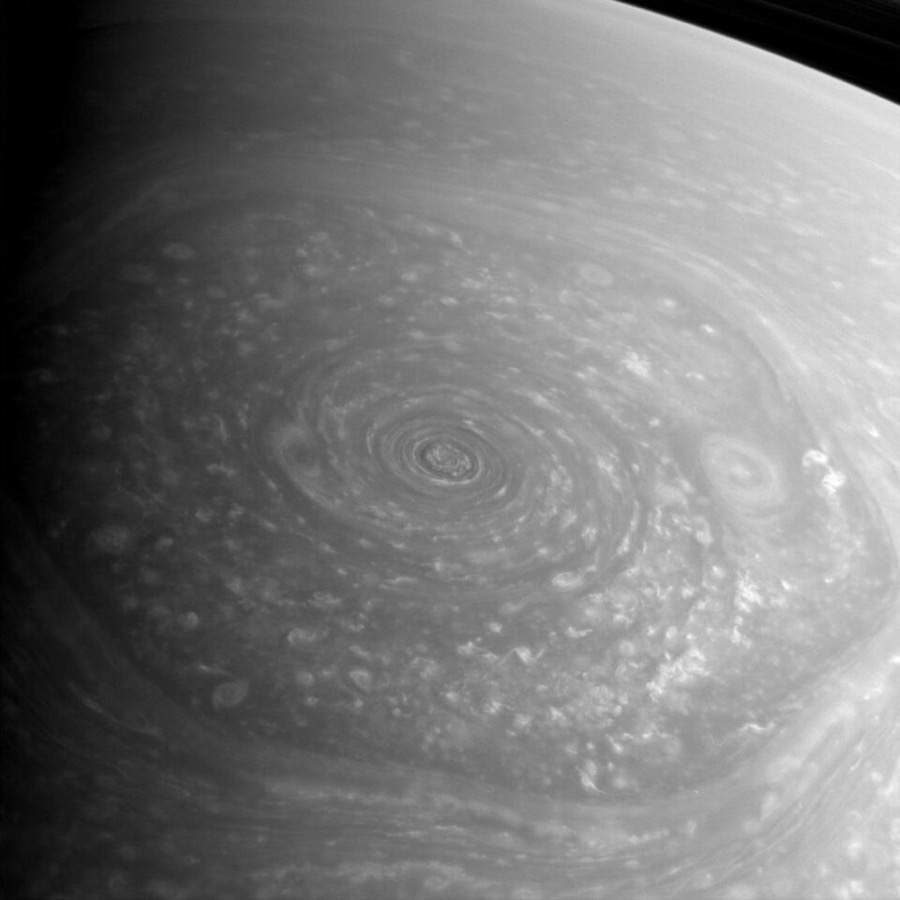
There is a hexagonal storm at Saturn's north pole.Voyager photographed it in 1981 and Cassini took sharper pictures in 2006.Scientists explain it as a flow that forms where wind speeds differ by latitude.Up to here we are looking at a photograph.
The red-pill sources take one more step.Look at a cube corner-on and its outline is a hexagon.So, they say, Saturn's hexagon is really the shadow of a cube.What was observed is a flat pattern; the cube is an explanation laid on top of it.
The next step comes down from the sky to the ground.The Kaaba in Mecca is a cube-shaped building draped in black cloth.Jewish tefillin are small black boxes bound to the forehead and arm.Both really are close to cubes.The sources read them as traces of Saturn worship.
The only thing holding this together is a shape.The Kaaba and tefillin come from different centuries, different religions and different uses.What links them is that both are square and black.This site calls that join 'shape matching'.
The same move keeps going.The square pools of the 9/11 Memorial, a graduation cap and the Mercedes logo end up in the same list.A cube is a common shape, so it can be found anywhere.Being findable and being connected are two different claims.
One real photograph, then three steps taken because the shapes look alike.
Read further
- From Saturn to the Black CubeHow the god of time got into the Kaaba, corporate logos, and the coronavirus